Amsterdam's Van Gogh Museum
Travel to Holland with Magic Carpet Journals to Visit Amsterdam's Van Gogh Museum
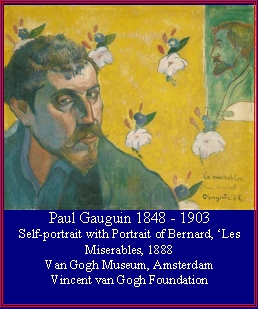
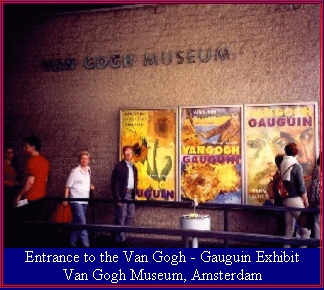 Besides being considered one of the father's of modern art, many people know Vincent van Gogh as the
artist who cut off part of his own ear. Probably less well known is the part another "father of modern art"
played in that melodrama - Paul Gauguin. For the first time an important exhibit undertook to explore the
dramatic relationship between Van Gogh and Gauguin, although that association has long been well
known in the art world. These two contemporaries were influential in the works of each other - however
their styles are remarkably different. The show explored their stormy relationship, the influence they had
on each other, and comparisons of their work, particularly those done of the same subject, sometimes at
the same time.
Besides being considered one of the father's of modern art, many people know Vincent van Gogh as the
artist who cut off part of his own ear. Probably less well known is the part another "father of modern art"
played in that melodrama - Paul Gauguin. For the first time an important exhibit undertook to explore the
dramatic relationship between Van Gogh and Gauguin, although that association has long been well
known in the art world. These two contemporaries were influential in the works of each other - however
their styles are remarkably different. The show explored their stormy relationship, the influence they had
on each other, and comparisons of their work, particularly those done of the same subject, sometimes at
the same time.
The Van Gogh and Gauguin exhibit in Amsterdam's Van Gogh Museum, closed June 2nd with
enthusiastic crowds of people rushing to view the works of these two famous artists before the show
closed. The show had been extremely popular since it began on February 9th 2002. The exhibit was
officially opened by Vincent Willem Van Gogh, a great-grandson of Theo Van Gogh, brother of Vincent,
and Mette Gauguin, a descendant of Paul Gauguin. In the first month over 175,000 visitors came to see
the exhibit. I was fortunate to reach the city of Amsterdam in time to join the crowds on that last afternoon. 120 masterpieces produced by this talented duo were
gathered from 65 different institutions and private collectors throughout the world, including unique loans from the Pushkin Museum in Moscow and the
Hermitage Museum in St. Petersburg, to visibly demonstrate one of the most volatile relationships in art history .
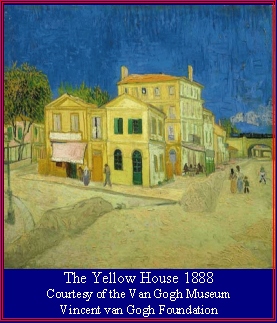 Van Gogh and Gauguin: The Studio of the South was the name of the show. A most prolific period in the artistic
lives of these two artists took place, during a few brief weeks, when they lived together in a little yellow house in
Arles, in the south of France. Van Gogh dreamed of this house becoming the base for an artist colony where
like-minded artists could work and expand their talents together. Although they first met in November 1887,
their association in Arles did not begin until October 1888. In preparation for the arrival of Gauguin at the little
yellow house, Van Gogh enthusiastically set about decorating the house with new works, including his famous
"Sunflowers." Although troubled, their relationship produced an artistic impetus. They shared ideas, thoughts and
artist's models. They found locations around Arles to paint together. During Vincent's artistic life, his brother,
Theo who was a Parisienne art dealer, apparently subsidized and promoted the work of Vincent. During
Gauguin's time in Arles, Theo began to sell Gauguin's paintings too, at Vincent's request. However, Gauguin was
increasingly unsettled by what he called Van Gogh's "disordered brain." The money brought in by Theo's sales,
gave Gauguin the financial independence he needed to leave Arles. Van Gogh became aware Gauguin was
thinking about leaving. Nine weeks after it began The Studio of the South came to an abrupt end. Realizing that
his dream was coming to an end, Van Gogh, in a fit of despair, cut off part of his left ear and gave it to a
prostitute. Van Gogh was hospitalized and Gauguin left for Paris. The two never met again. Van Gogh continued
to produce many paintings and drawings until he committed suicide approximately seven months later on July 27,
1890. Gauguin spent the remainder of his life painting in Brittany and his beloved islands in the South Pacific.
Van Gogh and Gauguin: The Studio of the South was the name of the show. A most prolific period in the artistic
lives of these two artists took place, during a few brief weeks, when they lived together in a little yellow house in
Arles, in the south of France. Van Gogh dreamed of this house becoming the base for an artist colony where
like-minded artists could work and expand their talents together. Although they first met in November 1887,
their association in Arles did not begin until October 1888. In preparation for the arrival of Gauguin at the little
yellow house, Van Gogh enthusiastically set about decorating the house with new works, including his famous
"Sunflowers." Although troubled, their relationship produced an artistic impetus. They shared ideas, thoughts and
artist's models. They found locations around Arles to paint together. During Vincent's artistic life, his brother,
Theo who was a Parisienne art dealer, apparently subsidized and promoted the work of Vincent. During
Gauguin's time in Arles, Theo began to sell Gauguin's paintings too, at Vincent's request. However, Gauguin was
increasingly unsettled by what he called Van Gogh's "disordered brain." The money brought in by Theo's sales,
gave Gauguin the financial independence he needed to leave Arles. Van Gogh became aware Gauguin was
thinking about leaving. Nine weeks after it began The Studio of the South came to an abrupt end. Realizing that
his dream was coming to an end, Van Gogh, in a fit of despair, cut off part of his left ear and gave it to a
prostitute. Van Gogh was hospitalized and Gauguin left for Paris. The two never met again. Van Gogh continued
to produce many paintings and drawings until he committed suicide approximately seven months later on July 27,
1890. Gauguin spent the remainder of his life painting in Brittany and his beloved islands in the South Pacific.
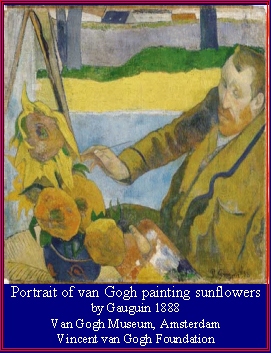
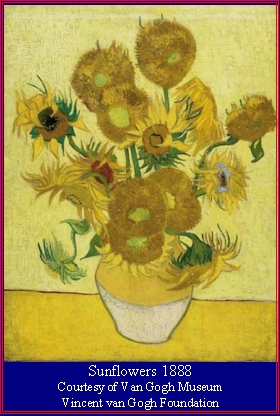 The exhibit contained a series of sunflower paintings, done by both artists, giving a comparison of their styles.
Three of Van Gogh's most famous Sunflower paintings were included. One is at home in Van Gogh Museum,
Amsterdam, one was on loan from the National Gallery in London, England. The third was loaned by the Yasuda
Fire and Marine Insurance Co. Ltd of Tokyo, Japan. The Yasuda Sunflower, as it is known, is the most
controversial. Its authenticity has been debated for a number of years. Just prior to this exhibit, Louis van
Tilborgh, Curator of Paintings, and Ella Hendriks, Head of Conservation at the Van Gogh Museum, undertook
their own study of the arguments presented as a result of collaborative technical research undertaken by The Art
Institute of Chicago and The Van Gogh Museum. They concluded that there was enough evidence to substantiate
the authenticity of this painting as one of the works of Vincent Van Gogh. I remember hearing that one of these
Sunflower paintings was purchased, at an auction, a few years ago, for the princely sum of five million dollars. At
the time it was the highest price that had ever been paid for a painting at an auction. (That price has since been
surpassed, many times over, for other paintings. Most recently, in July 2002, a painting by Peter Paul Rubens,
The Massacre of the Innocents, sold to a Canadian buyer for $76.7 million, breaking all previous records.)
The exhibit contained a series of sunflower paintings, done by both artists, giving a comparison of their styles.
Three of Van Gogh's most famous Sunflower paintings were included. One is at home in Van Gogh Museum,
Amsterdam, one was on loan from the National Gallery in London, England. The third was loaned by the Yasuda
Fire and Marine Insurance Co. Ltd of Tokyo, Japan. The Yasuda Sunflower, as it is known, is the most
controversial. Its authenticity has been debated for a number of years. Just prior to this exhibit, Louis van
Tilborgh, Curator of Paintings, and Ella Hendriks, Head of Conservation at the Van Gogh Museum, undertook
their own study of the arguments presented as a result of collaborative technical research undertaken by The Art
Institute of Chicago and The Van Gogh Museum. They concluded that there was enough evidence to substantiate
the authenticity of this painting as one of the works of Vincent Van Gogh. I remember hearing that one of these
Sunflower paintings was purchased, at an auction, a few years ago, for the princely sum of five million dollars. At
the time it was the highest price that had ever been paid for a painting at an auction. (That price has since been
surpassed, many times over, for other paintings. Most recently, in July 2002, a painting by Peter Paul Rubens,
The Massacre of the Innocents, sold to a Canadian buyer for $76.7 million, breaking all previous records.)
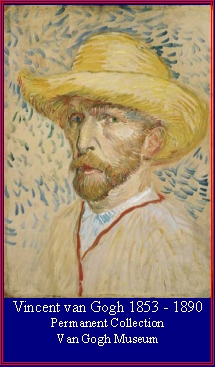
Amsterdam's Van Gogh Museum houses the largest collection of the works of Vincent Van Gogh, thanks to the
bequest of the collection to the city, by the artist's nephew. This collection is on permanent display there. The van
Gogh - Gauguin exhibit was fascinating. An emphasis was placed on pictures produced during their brief but
turbulent collaboration at the yellow house in Arles. One could see how these two artists had influenced the
artistic growth of each other, although their styles remained unique. Although it is over, art-lovers visiting
Amsterdam, should not miss the Van Gogh Museum to see the permanent collection of this important artist.
Until October 2002, The Necessity of Writing, the letters of Vincent van Gogh, will be on display.
Article by M. Maxine George
Picture: The Van Gogh - Gauguin Exhibit by M. Maxine George
For further information contact:
The Netherlands Board of Tourism Tel: 1-888-464-6552 (1-888-464-6552) E-mail: [email protected]
Website: http://www.holland.com
Return
to Table of Contents
To sign in as a fellow traveler on this Magic Carpet or to contact us just click on my name and
send a message. Last Updated on November 22, 2002 by M. Maxine George editor.
© 2002 Magic Carpet Journals. All rights reserved