Magic Carpet Journals
Cruising down the Nile
to Kom Ombo
Story by M. Maxine George
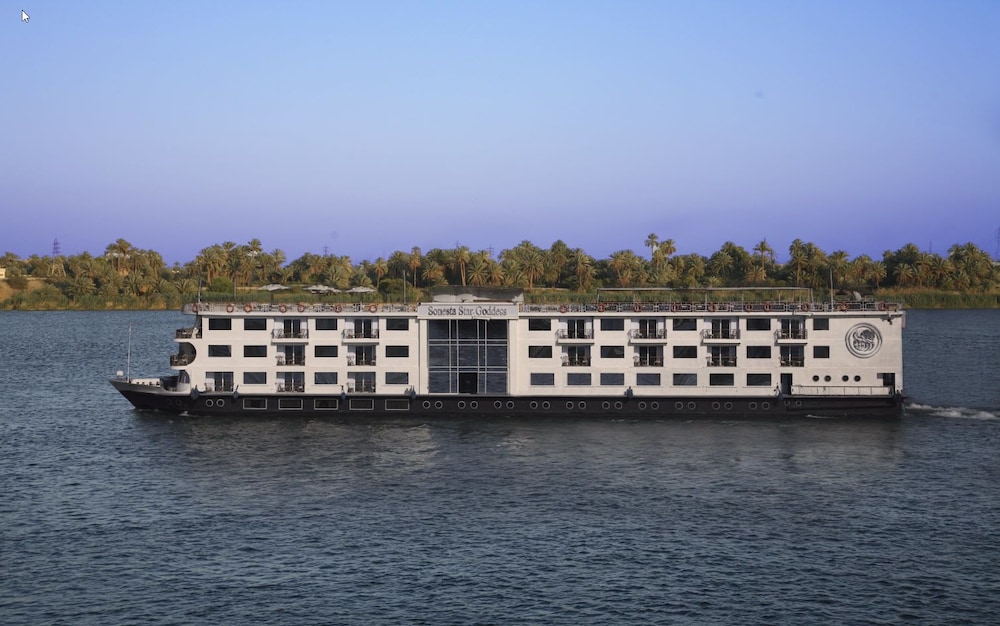
The Sonesta Star
Goddess
Our home for the next four days was a cruise
ship, the Sonesta Star Goddess, a large, white, vessel that plies
the Nile between Aswan and Luxor bringing visitors to see those
ancient Temples to be found along the route, while viewing life
along the Nile River. Climbing the gang plank, we were
welcomed aboard by a uniformed crew member. Our guide Shrief, who
has looked after us since we arrived in Egypt, took care of
everything. There were four decks, passenger cabins on three, and
the dining room on the one below the main deck. Once registration
was complete, we were invited to go to the dining room for a
leisurely buffet lunch. After lunch we were able to move into our
suite. The suites on this ship were quite comfortable. We had a
writing desk with chair near the entrance, a sitting room with
lounge, easy chair, and a TV, with a view of the Nile beyond the
sliding glass doors. The adjoining bedroom had twin beds and its own
window. A full bathroom with tub/shower, and a dressing area with
sufficient closet space to store most everything we had with us. The
sliding glass doors opened onto our own private balcony, a
comfortable place to watch the constantly changing vista.

Chef waits to fill our breakfast order aboard ship
Leaving Aswan, in the morning, our ship began to
slowly cruise down the Nile. The Egyptians believed that the east
was for the living and the west was for the dead, therefore birth
was traditionally on the east bank and burials were on the western
side of the river. Some burials have taken place in the caves high
in the distant cliffs that we could see to the west of the Nile.
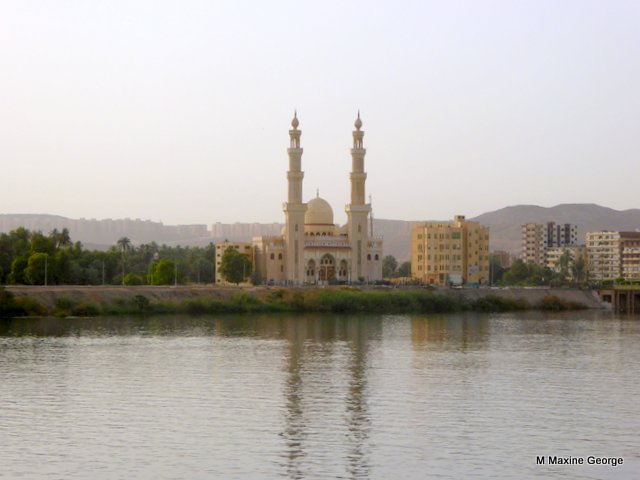
Mosque on banks of the Nile
The Valley of the Nile is lush and green with
palm trees and dense vegetation on both sides of the river. The
desert begins where the valley ends, therefore, almost all Egyptian
agriculture is concentrated beside the Nile. There were cattle
grazing, also herds of goats and camels. Someone with binoculars
thought they saw a couple of small elephants amongst the camel
herds.
Long-legged cranes, stood in the shallow water,
surveying the vegetation along the banks of the river. The ibis, the
holy bird of the Nile, a grave black and white bird, spread his
wings in graceful flight.
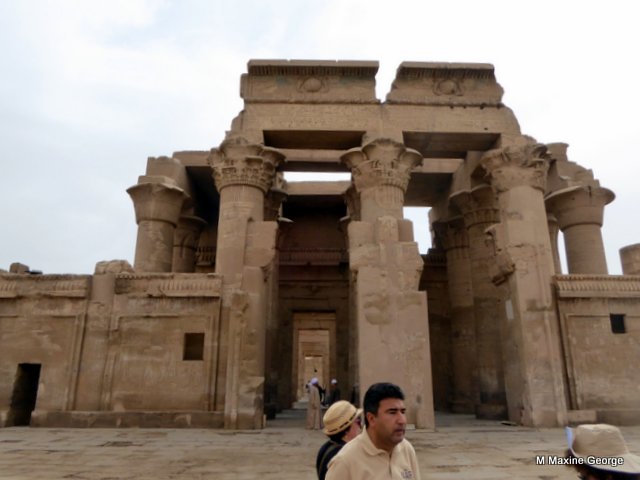
Our guide explains the double temple at Kom Ombo
We soon passed through the locks and after a
while we docked at Kom Ombo. A short walk along the road by the
river, took us to the temple. This double temple was dedicated to
two gods. One side was dedicated to the crocodile god, Sebek, the
god of fertility. The left temple was consecrated to Horoeris or
Horus the Great, the solar god of war. These two symmetrical temples
were once surrounded by a large outer wall, which opened onto the
Nile via two gateways. I soon realized that there has been a lot of
restoration done here at Kom Ombo since my last visit. It appears
they keep finding more of the pieces of the puzzles that make up
these ancient monuments. Obviously the Egyptians are taking their
responsibility, as custodians of these historic
treasures, very seriously. Progress is slow and painstakingly made, but then these
places were not built in day. Most of the temples were in
continuous construction throughout the reigns of several pharaohs.

Note the fancy capitals on the columns
Ten splendid columns along the propylon, had
ornate and delicate leaf capitals. These massive columns were no
less than one metre in diameter and at least ten metres high. Inside
the temple, the hypostyle hall contained three rows of columns with
ornate capitals. The centre columns divide the temple, providing two
aisles, leading back towards two separate sanctuaries.

The walls were inscribed with pictures of the
gods: Sebek, the crocodile headed god; Horus, the falcon headed god;
and the goddesses Shu, with her ostrich feather; and Hathor, with
her horns or the ears of a cow. These gods and goddesses were easily
recognizable because of their association with the specific birds or
animals. One wall relief showed the Emperor Tiberius giving
offerings to the gods.
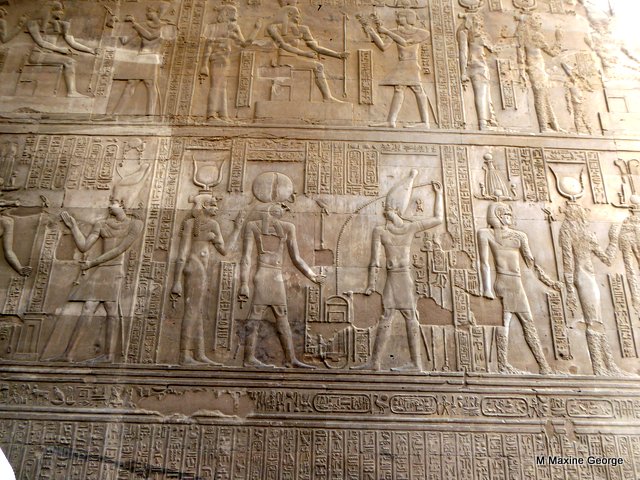
The walls still tell their stories
Sebek was believed to be the creator of the
world. He was the god of fertility. I was told that when the men
went to war, they left their women in the care of the god Sebek.
When they came home, all the women were pregnant.
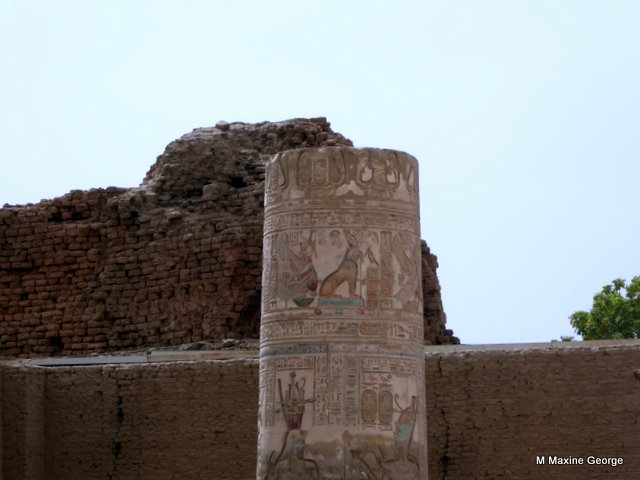
Notice the colours still on this column
Looking into a new stone building, we discovered
the dried mummies of a number of crocodiles, who once lived on the
bend of the river, here at the ancient city of Pa-Sebek. Crocodiles
ceased to live here on the river, after the dam was built.
Conservationists might look askance at that, but I imagine the
locals were glad to see the last of those vicious creatures.
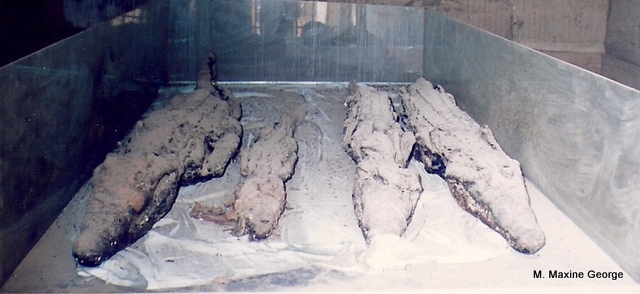
Mummies of the ancient crocodiles that lived on
the Nile
Shrief showed us what looks like a well, made of
blocks. Looking down into it, one can see water showing the level of
the Nile as it fluctuates throughout the year.
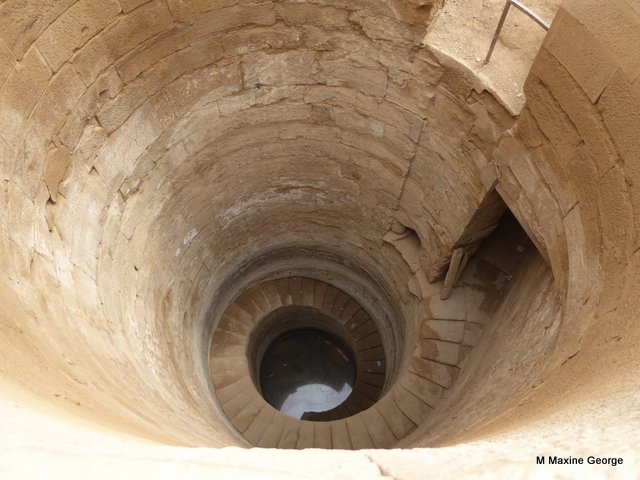
Used by the ancient Egyptians to measure the Nile
We went up on deck after lunch and sat on deck
chairs, under a canopy, watching the passing river banks as the ship
continued on to Edfu.
Article and Pictures by M. Maxine George
Thank you to Sonesta Star Goddess for PR Picture
of Ship
Cruise on to Edfu and Esna
Return to
Magic Carpet Journals
Last Updated on
November 10, 2018
by
M. Maxine George
editor.
©
2018 Magic Carpet Journals. All rights reserved
|
|